Typing “Vogue College of Fashion” into Google usually means you’re past the curiosity stage. You already know the name is attached to the most influential fashion publication in the world, and you want to know whether that name translates into something you can actually build a career on. This guide answers the question directly: what you get for your tuition, where graduates actually end up working, how the school compares to other fashion business programs, and how to decide if it’s the right move for you.
Vogue College of Fashion runs campuses in London, Madrid and New York, alongside a growing slate of online courses, short courses and master’s degrees built around fashion media, fashion business, styling and luxury brand management. It carries the Vogue name and Condé Nast’s industry access, but like any brand-backed education program, the value depends heavily on which specific course you’re looking at, what you already bring to the table, and what “worth it” means for your career stage. We’ll break all of that down below, without the marketing gloss.
What Vogue College of Fashion Actually Offers
Before judging whether a fashion education program is worth the investment, it helps to understand the full shape of what’s on the table. Vogue College of Fashion isn’t a single course it’s an umbrella of programs at very different levels, price points and time commitments.
Master’s and Postgraduate Programs
The school’s most academically rigorous offerings are its master’s programs, delivered in partnership with accredited universities such as the University of Buckingham, Universidad Carlos III de Madrid and Universidad Nebrija. Programs include an MA in Fashion Journalism & Editorial Direction, an MA in Fashion & Beauty Communication, and an MA in International Luxury Business (also offered online). These carry formal academic credit because of the university partnerships behind them, which matters if you eventually want the qualification recognized by employers or further academic study.
Undergraduate and Foundation Courses
Vogue College also offers undergraduate-level and foundation study, aimed at students building a portfolio and skill base in fashion, media and business from the ground up. These programs lean on cohort learning, guest speakers and placement opportunities rather than pure lecture-based instruction.
Short Courses and Online Courses
This is where most prospective students actually enter the Vogue College ecosystem. Online courses run roughly eight weeks and cover subjects like fashion styling, creative direction, digital marketing for fashion and luxury, fashion branding and communication, and fashion business fundamentals. They’re asynchronous, delivered through a Canvas-based learning platform, and require no portfolio for admission, making them the most accessible entry point for career-changers and beginners.
Pre-College and Summer Programs
For younger students (14–17) or undergraduates looking for a short, immersive taste of the industry, Vogue College runs pre-college and summer programs in its physical campus cities, combining coursework with site visits and access to industry professionals.
[Placement suggestion: Insert this table directly after this section, before the tuition breakdown.]
| Program Type | Typical Length | Format | Best Suited For |
|---|---|---|---|
| Master’s Programs | 9–12 months | In-person (London/Madrid) | Career pivoters wanting formal accreditation |
| Undergraduate Programs | Multi-year | In-person | Students building a fashion career from scratch |
| Short/Online Courses | 4–8 weeks | Asynchronous online | Professionals upskilling, beginners testing interest |
| Pre-College/Summer | 1–4 weeks | In-person | High schoolers, undergrads exploring the field |
Vogue College of Fashion Tuition Fees: What You’re Really Paying For
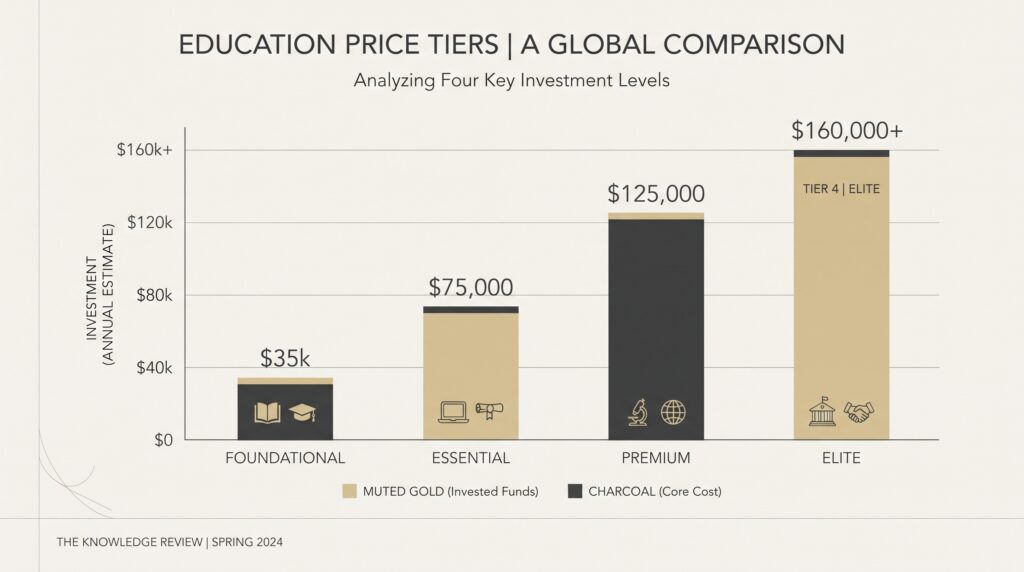
Tuition at Vogue College of Fashion varies dramatically depending on the program tier, and this is where a lot of prospective students get their expectations wrong.
At the top end, master’s programs run into five figures. The MA in Fashion & Beauty Communication has been listed at roughly €14,900 for a nine-month program, while the MA in Fashion Journalism & Editorial Direction and the MA International Luxury Business have both been listed around £24,950 for UK students (higher for non-UK applicants, closer to £29,950). These figures sit in the same range as other established luxury and fashion business schools, such as the Institut Français de la Mode, rather than undercutting them.
At the lower end, the eight-week online courses have been priced starting around $1,500 CAD, and the four-week Online Essentials courses for high school students run about $995 per course. These online options don’t carry university credit; they result in a Certificate of Completion from Vogue College of Fashion itself, not an accredited academic qualification.
A few financial details matter more than the headline price:
- No student loan eligibility. Students at Vogue College of Fashion are currently not eligible for government student loan programs, which changes the real affordability calculation compared to a traditional university.
- Limited installment options. Some courses require full payment at booking, while others allow the fee to be split — this varies by program, so it’s worth confirming directly with admissions before assuming flexibility.
- Fees can increase annually. Tuition is subject to yearly increases tied to market conditions, so a quoted price today isn’t necessarily what next year’s cohort will pay.
- Scholarships are limited or unavailable on several courses, particularly the online short courses.
The practical takeaway: the return on investment looks very different for a $1,500 eight-week online course than it does for a £25,000 master’s degree. Treat these as two separate purchase decisions, not one brand.
Career Outcomes: Where Do Vogue College Graduates Actually Work?
This is the question that matters most and gets answered least clearly on the school’s own marketing pages, so it’s worth looking at independently.
Vogue College of Fashion (and its predecessor, Condé Nast College of Fashion and Design, established in 2013) points to alumni working at Condé Nast titles, Net-a-Porter, Harvey Nichols, L’Oréal, WGSN, TikTok, Louis Vuitton, Cartier, Dior and GQ. Independent analysis of alumni-reported LinkedIn data offers a more grounded picture: among thousands of alumni who listed the college on their profiles, only a small percentage reported currently working at Condé Nast or Vogue directly, with a wider spread landing at adjacent luxury, retail and media brands.
This isn’t necessarily a red flag — it’s simply how brand-name creative education tends to work across the industry. A recognizable name on your CV opens conversations, but it rarely guarantees direct placement at the flagship brand itself. What the college does appear to consistently deliver is:
- Direct exposure to working professionals. Guest speakers and faculty have included figures like Chioma Nnadi, Ángel Perea and various current or former Vogue and Condé Nast staff, giving students real access rather than case-study theory.
- Site visits and industry immersion, particularly in the London and Madrid campuses, including visits to Condé Nast offices and partner luxury brands.
- A resume signal, especially for online short-course students or career-changers who need a recognizable credential to open the first interview.
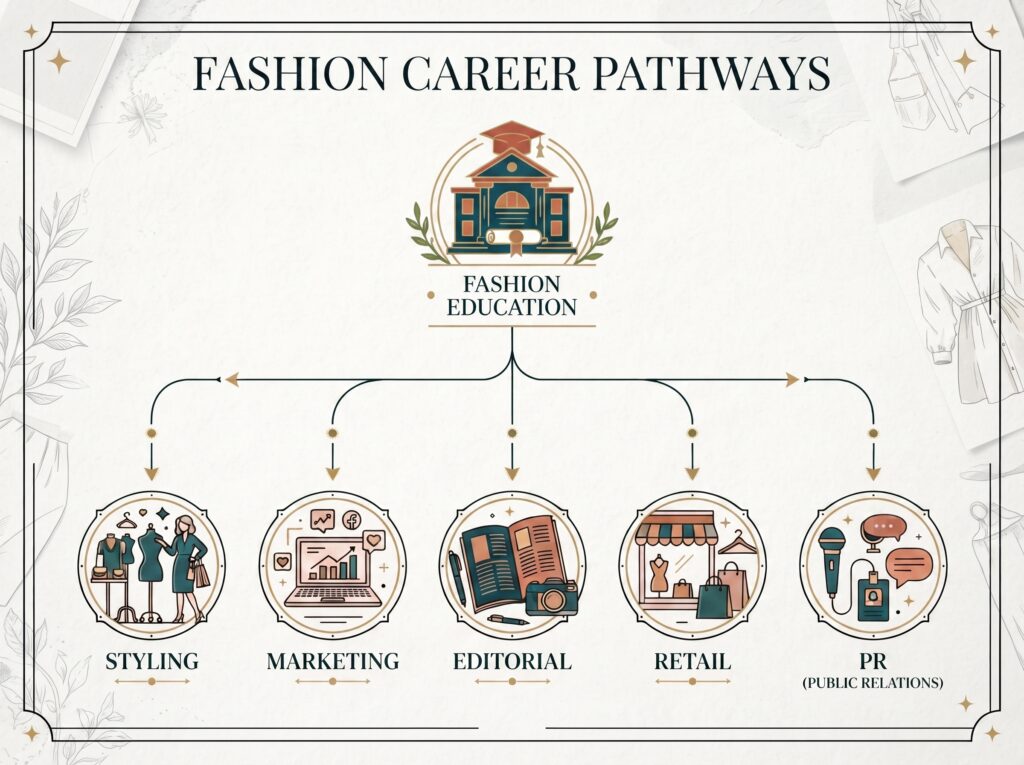
If your goal is a specific role at Vogue or Condé Nast itself, treat the college as one input among several strong portfolio work, direct networking and industry internships still carry significant weight. If your goal is building a fashion business, styling or communication literacy to break into the broader industry (retail, luxury marketing, PR, styling assistance, content), the practical training and access are more directly useful.
Vogue College of Fashion vs Other Fashion Business Schools
To judge value fairly, it helps to see Vogue College of Fashion next to comparable institutions rather than in isolation.
| Feature | Vogue College of Fashion | Institut Français de la Mode | Central Saint Martins (UAL) | Independent Online Fashion Courses |
|---|---|---|---|---|
| Brand access | Vogue / Condé Nast network | French luxury industry network | UK art & design network | Varies by platform |
| Accreditation | Partial (via university partners on select programs) | Fully accredited | Fully accredited university | Rarely accredited |
| Typical Master’s Cost | ~£24,950–£29,950 | Comparable, often similar range | Lower for UK/EU students, higher for international | N/A |
| Online Course Cost | ~$1,500 CAD (8 weeks) | Limited online offering | Limited short online options | $200–$2,000 |
| Portfolio Required | No (online courses) | Yes (most programs) | Yes | Rarely |
| Student Loan Eligible | No | Often yes (accredited routes) | Yes | No |
| Best For | Brand access + flexible entry | Deep design/technical training | Rigorous design credentials | Budget-friendly upskilling |
The honest positioning: Vogue College of Fashion sits in a middle lane. It’s more accessible than a full art-school design degree, offers stronger brand-name access than most independent online platforms, but doesn’t carry the depth of technical design training you’d get from a specialized design institution, nor the full accreditation and loan eligibility of a public university.
Is Vogue College of Fashion Worth It? Weighing the Pros and Cons
Where it delivers real value:
- Genuine access to working fashion, media and luxury professionals through guest lectures and site visits
- A recognizable name that helps early-career candidates get past initial resume screening
- Flexible online formats that fit around existing jobs or study, useful for career-changers
- No portfolio barrier to entry for online short courses, making it approachable for beginners
Where expectations should be tempered:
- Not all programs carry formal academic accreditation check this per course, not per brand
- No student loan eligibility changes the real affordability math significantly
- Direct placement at Vogue or Condé Nast itself is the exception, not the norm, even among alumni
- Tuition for master’s-level programs is comparable to, not cheaper than, established fashion business schools
The clearest way to frame it: Vogue College of Fashion is well-suited to people who want industry exposure and a credible signal fast, particularly through its short courses, and less suited to people who specifically need a fully accredited, loan-eligible academic pathway into fashion.
How to Decide: A Step-by-Step Framework for Prospective Students

- Define what you actually need the credential for. A resume signal for a career pivot has different requirements than a formal academic pathway into a regulated role.
- Check accreditation status on the exact course, not the institution as a whole; university-partnered master’s programs differ meaningfully from certificate-based short courses.
- Confirm payment terms directly with admissions, since installment availability and refund policies vary by program and campus.
- Compare the specific course cost against comparable options — use the table above as a starting point, then get direct quotes.
- Talk to alumni if possible. Look up recent graduates on LinkedIn from the specific program you’re considering (not just the institution broadly) to gauge realistic outcomes.
- Weigh online versus in-person based on how much you value physical access to the London, Madrid or New York industry ecosystem versus flexibility and lower cost.
Frequently Asked Questions
Is Vogue College of Fashion accredited? It depends on the specific program. Several master’s programs carry credit through university partners such as the University of Buckingham and Universidad Carlos III de Madrid. Many short courses and online courses award only a Certificate of Completion without formal academic credit.
How much does Vogue College of Fashion cost? Costs range widely: online short courses have started around $1,500 CAD for eight weeks, while master’s programs have run from roughly €14,900 to nearly £30,000 depending on the program and nationality of the applicant.
Can I study at Vogue College of Fashion online? Yes. The college offers asynchronous online courses in subjects like fashion styling, creative direction, digital marketing and fashion business, delivered through a Canvas-based learning platform, with no portfolio required for admission.
Do Vogue College of Fashion graduates work at Vogue? Some do, but it’s not the norm. Alumni are more commonly found across the wider luxury, retail and media industry; companies like Net-a-Porter, Harvey Nichols, L’Oréal, WGSN and Louis Vuitton feature frequently in alumni. Alumni are currently not eligible for government student loan financing, which is an important factor in calculating true affordability compared to accredited public universities.
What is the difference between Vogue College of Fashion’s online and in-person programs? Online programs are shorter, more affordable, asynchronous, and don’t require a portfolio. In-person programs held in London, Madrid, or New York are longer, costlier, and include direct access to campus facilities, site visits and in-person networking events.
Conclusion: Should You Enroll?
Vogue College of Fashion earns its reputation from real industry access, guest speakers, site visits and a name that carries weight in fashion, media and luxury circles. But “worth it” isn’t a single answer across the entire institution; it depends entirely on which specific program you’re evaluating, its accreditation status, and what you personally need from the credential. Treat the brand name as a starting point for research, not a substitute for it; check the exact program’s accreditation, cost, and realistic outcomes before committing to tuition.